
Est. 1994  ·  Colfax, Washington Aerial application, seeding & fertilizer · flown across the Palouse

Home / Services

What we
put on by air.

Spray, seed or fertilizer, liquid or dry, metered accurately and flown low across ground that ground rigs can't touch. Here's the work we do, season in and season out. Tap any service for the full rundown.

Service 01

Aerial Spraying

Herbicide, fungicide and insecticide, put on at speed. We cover the tucked-away fields, the steep draws and the soft ground a ground rig can't reach without cutting ruts through your crop.

  • Pre-plant burndown and post-emerge herbicide
  • Fungicide at flag-leaf and heading
  • Insecticide on aphids, weevils and cutworm
  • Low-drift work next to sensitive neighbors
Full details →
Service 02

Aerial Seeding

Broadcast seeding from the air gets a crop in the ground fast when the calendar or the mud won't wait. We seed right over standing stubble and across the wet spots you can't drive.

  • Cover crops and cereal rye into standing stubble
  • Pasture and CRP seed on ground you can't drive
  • Fast coverage ahead of a weather window
  • Even spread on the steepest Palouse hillsides
Full details →
Service 03

Fertilizer, Liquid & Dry

Foliar feed and dry fertilizer, laid down when the canopy is too tall or the field too soft to run equipment through it. Your crop gets fed on time and keeps every wheel track out of it.

  • Foliar nitrogen and micronutrients
  • Dry fertilizer top-dress by air
  • In-season feeding without wheel tracks
  • Timed to the crop, not the equipment
Full details →
Service 04

Precision, Low-Drift Application

The whole job is putting product on your crop and nowhere else. We fly 6 to 10 feet off the deck, read the wind all day, and set the load down within a couple feet of target.

  • Flown low for tight, accurate placement
  • Wind and conditions watched all day
  • Neighboring crops and property respected
  • The same country flown for 40-plus years
Full details →
The Palouse Crop Book

Built for what
this country grows.

The Palouse runs on soft white wheat, barley, and the legumes that follow them in rotation. We've flown all of it, and we know how each one wants to be treated and when.

Soft White Wheat Winter & Spring Wheat Barley Dry Peas Lentils Garbanzos Canola Bluegrass & CRP
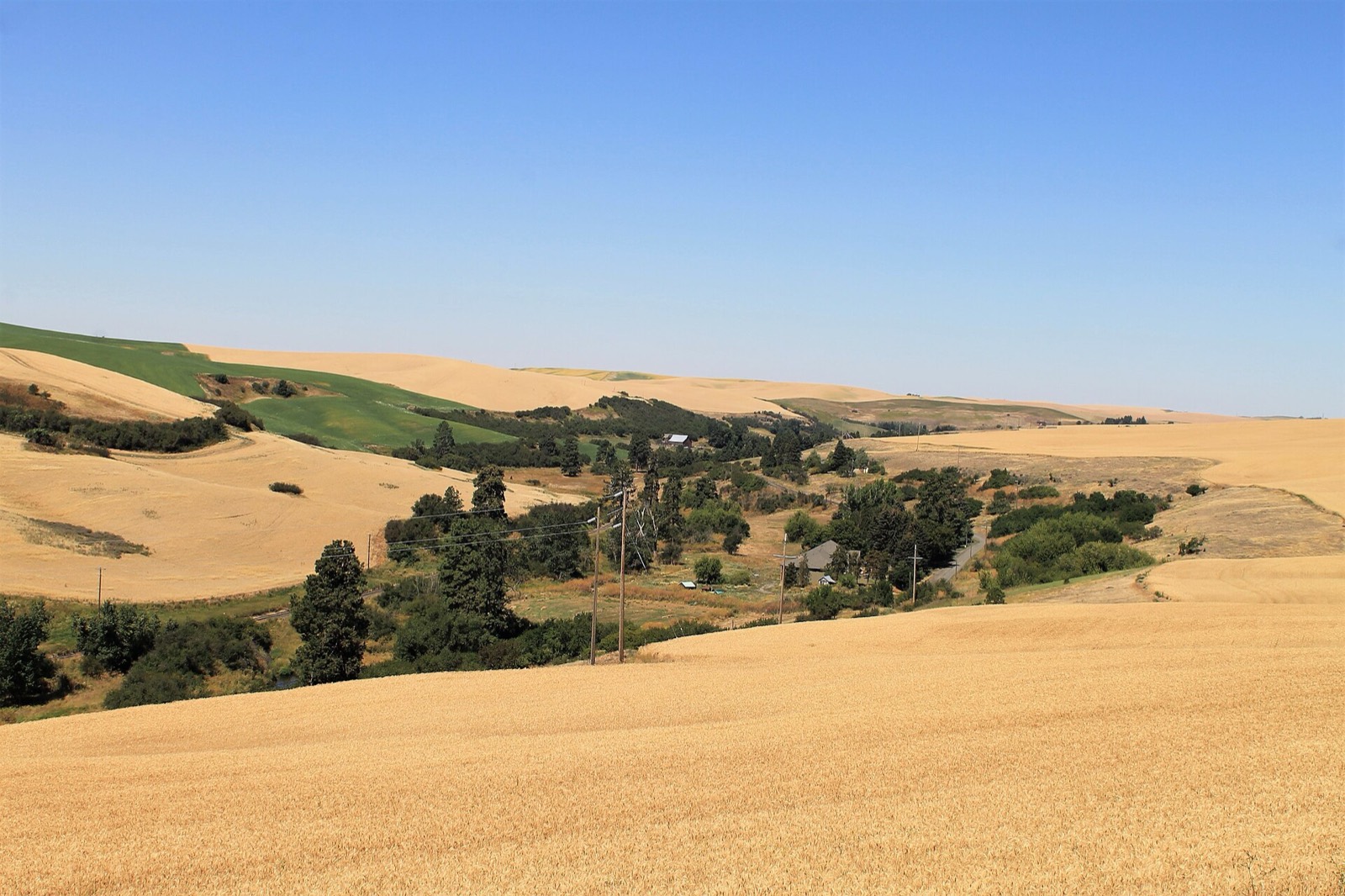
Golden Palouse wheat fields near Pullman, Washington Whitman County wheat country
How Pricing Works

Straight answers on cost.

We quote by the job, mostly by the acre. Every field is a little different, so we like to look at what you have before we put a number on it. Below is how we think about it.

01

Acreage and how it blocks up

The more acres you have in one block, the less we spend ferrying back and forth to the strip. A few big square fields cost us less per acre to cover than the same acres scattered in small pieces across the county.

02

The product and the rate

What we put down and how much of it drives the cost. A light burndown is not the same as a heavier fungicide at flag-leaf, a dry fertilizer run, or a seeding job, and the gallons or pounds per acre change how many hopper loads we fly.

03

Field shape, obstacles and access

Powerlines, trees, buildings, wires and odd corners slow us down and add ferry time between passes. A clean rectangle with room to turn flies faster than a narrow draw hemmed in by obstacles, and that shows up in the price.

04

Time of season and how the work bunches up

Ag work runs in tight windows, and when heading and spray timing hit all at once the days get long. Booking ahead and giving us some flexibility on the day helps us fit you in and keeps the work moving.

The honest way to get a number is to call us with your field. Tell us the acres, the location, what you want put down and roughly when, and we will give you a straight quote. Reach us at (509) 553-6739.

How a Job Works

Simple to book. Ready to fly.

Step 01

Call the Shop

Tell us the field, the crop and what needs to go on. We'll talk timing and give you a straight price.

Step 02

Mark the Ground

We lay out the field, note the power lines, the sensitive neighbors and the safe approaches.

Step 03

Watch the Window

When wind and weather are fit, we load up and fly, often the same morning conditions turn right.

Step 04

Done & Logged

Accurate coverage, records kept, and a call to let you know it's on and finished.

Got acres that need covering?

Call the shop and we'll get you on the schedule before the season fills up.