Flying low, 6 to 10 feet off the deck
We work the boom right down on the canopy. Flown that low the product has almost no distance to travel and almost no chance to wander, so it lands tight where we put it instead of hanging in the air.

Every job we fly comes down to one thing: the product lands on your crop and nowhere else. Spray that leaves the field is money out of your hopper and trouble waiting to happen. It is a risk to the neighbor's crop, to the water and the bees, and to the whole industry's standing. After decades over the same country, keeping product where it belongs is the part of the work we care about most.
Low-drift application is not one trick. It is a stack of small decisions made right, every load, all day. Height off the deck. Droplet size. Boom setup. The wind and the temperature. The buffers around sensitive ground. Where the swath lines fall. We fly all of it together, and when the conditions will not let us do it clean, we wait or we move to a different field.
We have flown the Palouse since 1994, the same draws and hilltops and property lines year after year. That local knowledge is a big part of what you are hiring. We know what is planted next door, where the organic ground sits, which draws hold an inversion in the morning, and how the wind runs off a particular slope. You cannot buy that off a spec sheet. It gets built one season at a time.
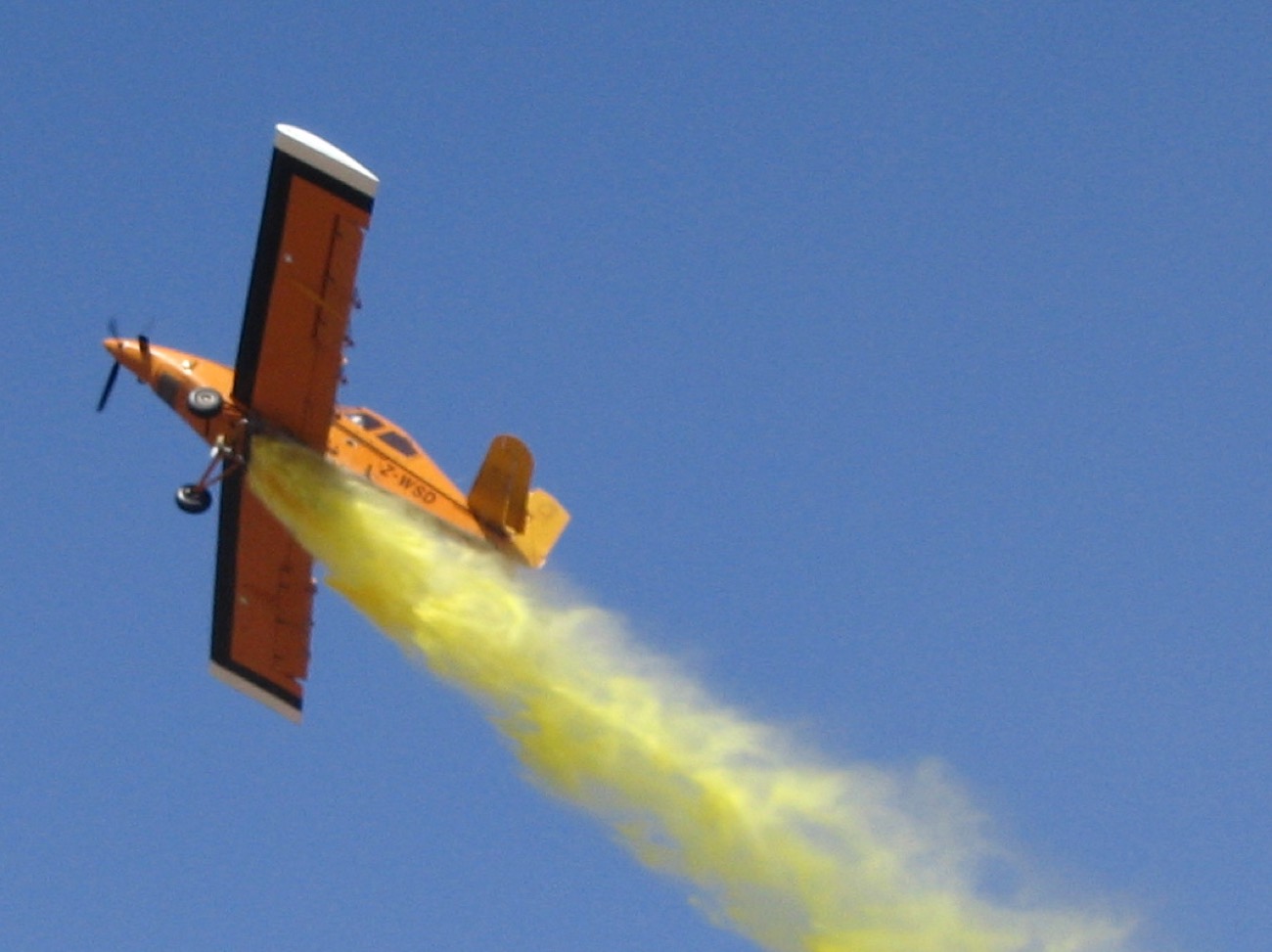 On the Palouse · Since 1994
“The product lands on your crop and nowhere else. That is the whole job, and it is the only way we know how to fly.”
— Fender Air Service
We work the boom right down on the canopy. Flown that low the product has almost no distance to travel and almost no chance to wander, so it lands tight where we put it instead of hanging in the air.
The droplet does most of the work. Too fine and it hangs and drifts, too coarse and coverage suffers. We set nozzle type, pressure and boom position for the product and the day so the droplets land on the crop and stay there.
We watch wind speed and direction all day and we are just as careful on the still mornings. A temperature inversion can hold fine droplets in the layer near the ground and carry them a long way once it lifts, so sometimes the right call is to wait an hour.
We map what sits around a field before we fly: orchards and grapes, organic ground, bee yards, open water and ditches. We hold the buffers the label and good sense call for and pick conditions that keep everything on target.
The aircraft runs GPS guidance so passes line up edge to edge with no skips and no heavy overlap. That means even coverage across the whole field and no doubled-up product along the wheel tracks or the headlands.
Every job gets logged: the field, the product and rate, the date and the conditions we flew in. You get a clean record of exactly what went on your ground, which matters for your own books and for anyone who asks.
Before we fly we walk the map. We note the power lines, the trees and the odd corners, and we mark the sensitive neighbors, the organic ground, the bee yards and the water that need a buffer.
We match droplet size, nozzles, pressure and boom position to what is going on and the rate it calls for. The setup for a light burndown is not the setup for a fungicide at flag-leaf, and we build the load accordingly.
When the wind and the inversion are fit, we load up and fly the swaths on GPS lines, 6 to 10 feet off the deck. If the air will not let us fly it clean, we hold or move to another field and come back.
We record the field, the product and rate, and the conditions we flew, then call to tell you it is on and finished. You get accurate coverage and a straight record of what went down.
Every acre we fly gets the low-drift treatment, but it matters most when the margin for error is thin. Fields hemmed in by grapes, orchards or organic ground, ground that butts up against a bee yard or open water, and any job flown when the wind is marginal all call for a careful hand and often a tighter buffer.
The clock matters too. Fungicide at flag-leaf and heading, a burndown ahead of planting, an insecticide on aphids as they move in: these all live in short windows, and the pressure to get the acres covered is exactly when drift discipline slips on a lot of operations. It does not slip here. We would rather fly one field right than three fields fast.
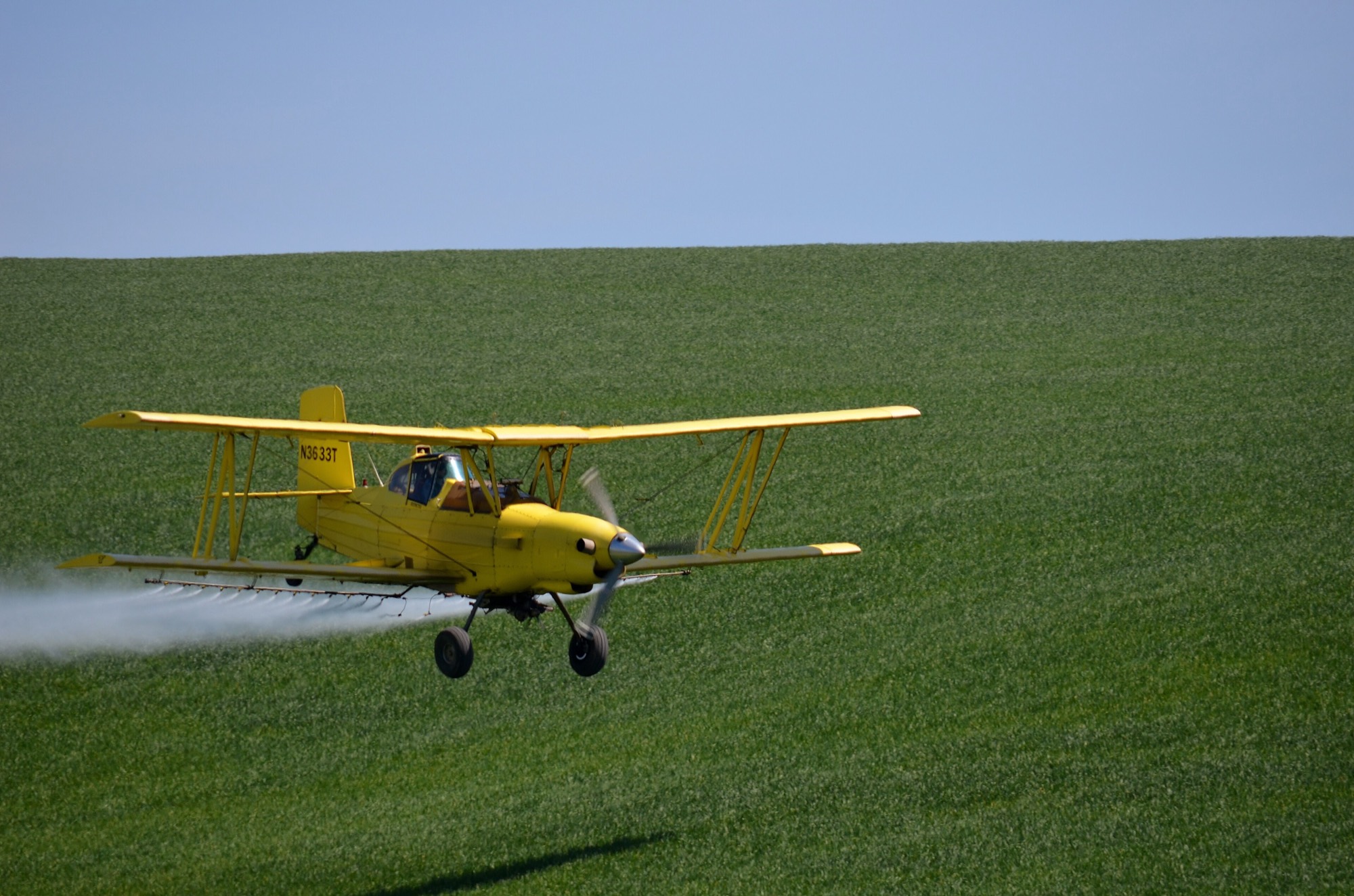 Flown when the window opens
Flown low with the droplet set right, the load lands where you paid to put it. That is better coverage on your acres and less of your chemical drifting off to feed the ditch or the neighbor.
Most drift trouble is really a fence-line problem. Holding buffers and knowing what is planted next door keeps product off sensitive crops, organic ground, bees and water, and keeps you out of a fight you do not need.
We have flown this country since 1994. We know which draws hold an inversion, how the wind runs off a given slope and what sits over the property line, and that local read is what keeps a job clean.
Every job is logged with the product, rate, date and conditions. That is stewardship you can point to and paperwork that holds up if anyone ever asks what went on your field.
Three things do most of it. We fly low, 6 to 10 feet off the deck, so the product has no distance to wander. We set the droplet size coarse enough that it falls out of the air instead of hanging. And we hold buffers around sensitive ground and only fly when the wind and the inversion are fit. If the air is wrong we wait or move to another field.
An inversion is when the air near the ground is cooler than the air above it, which usually happens on calm, clear mornings. It traps fine droplets in a layer that can drift a long way once it lifts and starts to move. Still air is not the same as safe air, so on those mornings we check conditions carefully and sometimes hold off an hour or fly a different field first.
Yes. Every job gets logged with the field, the product and rate, the date and the conditions we flew in. You get a clean record of exactly what went on your ground for your own books and for anyone who needs to see it.
We map that ground before we ever fly. Bee yards, organic acres, orchards and grapes, ditches and open water all get a buffer, and we pick the wind and conditions that keep product on target. Knowing what sits around a field ahead of time is how most drift problems get avoided before they start.
Call the shop or send your fields and we'll get you on the schedule.