Pre-plant burndown
Herbicide before the crop goes in, to clean up volunteers and winter weeds so you seed into a clean field. Handy when spring ground is too wet to drive.

Aerial spraying is what we do most. We put herbicide, fungicide and insecticide on wheat, barley, peas, lentils, garbanzos and canola across Whitman County and the ground around it. When the plants are up and a ground rig would rut your soft spots or crush a canopy, we come in over the top and leave the field the way we found it, no wheel tracks and no compaction.
The Palouse is steep and rolling. A lot of these hills are too soft or too sharp for a sprayer to run without tearing them up or tipping. From the air the slope doesn't matter. We fly the whole field at the same rate, tops to bottoms, and cover the draws and side hills a rig has to skip or crawl through.
The other thing air buys you is speed. When stripe rust shows at flag-leaf or aphids blow in, you have days, not weeks, and if the ground is wet you have no rig at all. We can be over a field and done in the time it takes to hook up a tank, and we can knock out a lot of acres in a day. Darrell has flown this country since 1994 and knows these fields, the wind patterns, and where the sensitive neighbors are.
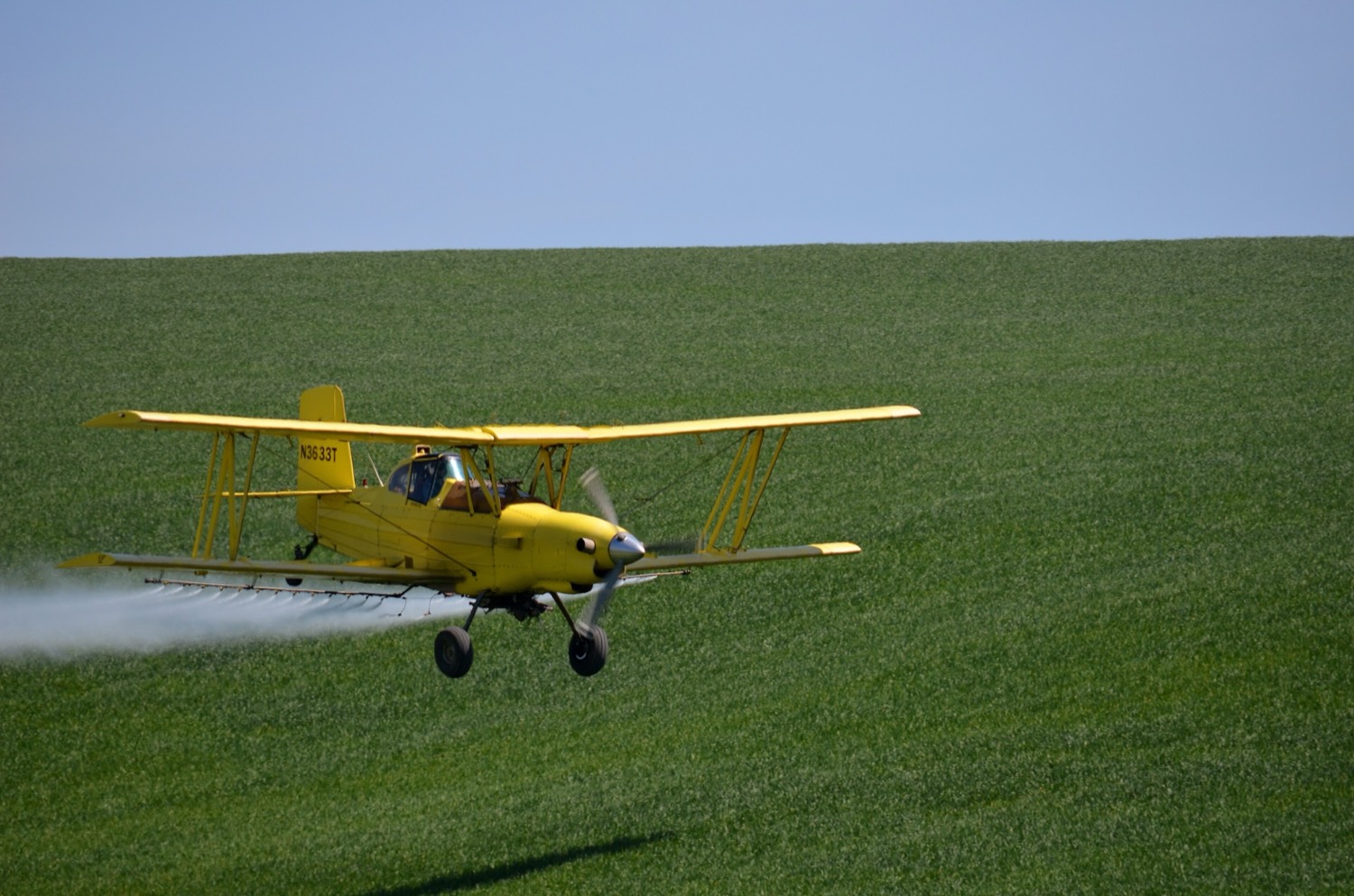 On the Palouse · Since 1994
“When the ground's too wet for a rig and the rust is already showing, an airplane is the only thing that gets on in time.”
— Fender Air Service
Herbicide before the crop goes in, to clean up volunteers and winter weeds so you seed into a clean field. Handy when spring ground is too wet to drive.
Broadleaf and grass control once the crop is up. We go over the top without running down rows or rutting the field, which matters most on peas, lentils and garbanzos.
This is the big one on Palouse wheat and barley. Stripe rust moves fast, and protecting the flag-leaf and head is where your yield is. We time it to the growth stage and get on before the disease gets ahead of you.
Aphids, cereal leaf beetle, pea weevil, cutworm and army cutworm. When a pest shows up you often have a narrow window, and air lets us hit it before the damage is done.
Pre-harvest treatments on peas, lentils, garbanzos and canola to dry the crop down even so you can cut it clean and on time. Aerial keeps you out of the standing crop right before harvest.
Side hills, draws, wet spots and ground too rough for a rig. We fly it all at the same rate with no compaction and no skipped acres.
Tell us the crop, the field location, the product and rate, and what growth stage you're at. We'll tell you where you sit in the line and what the wind looks like.
We watch wind and inversion and fly when it's right for a clean job. We line up the field, note the buffers around sensitive neighbors and the edges we need to hold off, and load the hopper.
Even swaths, tops to bottoms, on the whole field. Steep and soft ground gets the same rate as the flat, so you get coverage where a rig would have skipped or slowed down.
When the field is finished you hear from us, with what went on and any spot we couldn't fly for drift reasons so nothing surprises you.
Aerial work lives and dies on timing, so the earlier you call the better we can fit you in. Burndown goes on before you seed. Post-emerge herbicide goes on while the crop is small and the weeds are small. Fungicide is a flag-leaf and heading call, and once stripe rust is showing you want to be scheduled, not scrambling. Insecticide is a scouting call, so once you see the pest at threshold, get on the phone.
The wet-ground stretches are exactly when growers need us most, because that's when the ground rig can't go and the field still needs treating. If you think a window is coming, call ahead so you're in the line before the weather closes it. Desiccation and harvest aid get lined up as the crop nears maturity so you can cut on schedule.
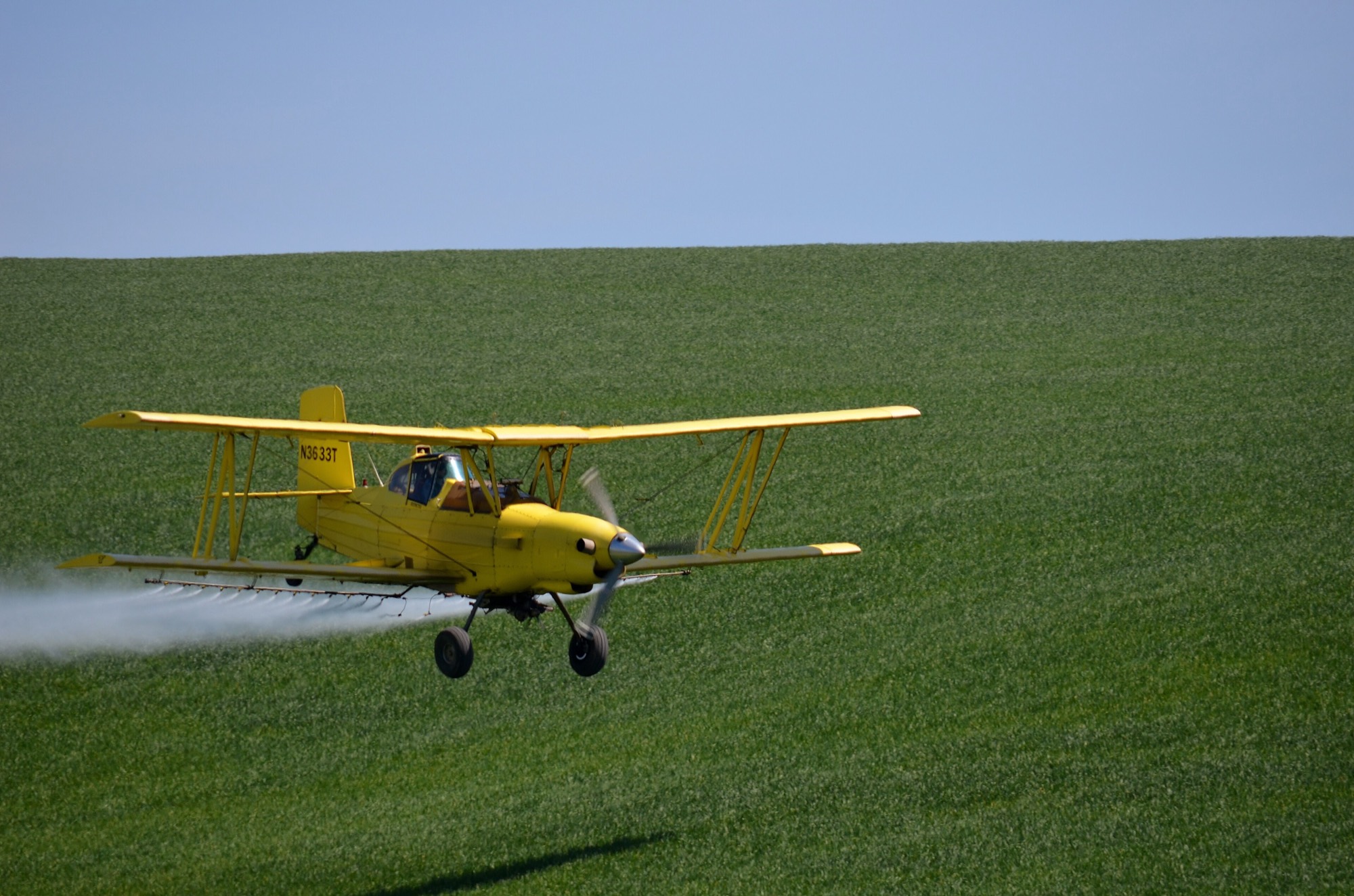 Flown when the window opens
From the air you lose zero acres to sprayer tracks and you don't compact wet ground or crush a standing canopy. The whole field gets treated, edges and draws included.
Steep side hills, soft spots and rough draws all get the same rate as the flat. Slope and mud don't stop an airplane the way they stop a ground rig.
Stripe rust and aphids don't wait. We can be over your field and done fast, and cover a lot of acres in a day, so you hit the growth stage or the pest at the right time.
Darrell has flown the Palouse since 1994 and knows this country, the wind and the neighbors. We watch drift and hold buffers around sensitive ground so the product ends up on your crop and nowhere else.
Yes. Steep and rolling ground is most of what we fly. From the air the slope doesn't matter, so side hills and draws get the same even rate as the flat, with no rutting and no skipped acres.
It depends on the weather and how many growers are ahead of you, but air is quick once conditions are right. Call as early as you can so you're in the line before your window closes, especially for flag-leaf fungicide and insect flare-ups.
We watch wind and inversion and fly only when it's right for a clean job. We hold buffers around sensitive ground and sensitive crops, and if we can't fly an edge cleanly we'll tell you rather than risk it.
That's a big reason to use us. When the field is too wet for a rig, an airplane doesn't touch the ground, so we can still get your herbicide, fungicide or insecticide on without waiting for it to dry.
Call the shop or send your fields and we'll get you on the schedule.